ABOUT · PARTNERSHIP
Who we are, what we won't do, and how we think about material and cost
About us, the project fit guide, the material selection framework, and the real economics of getting a ceramic design wrong.
About Us
/about/
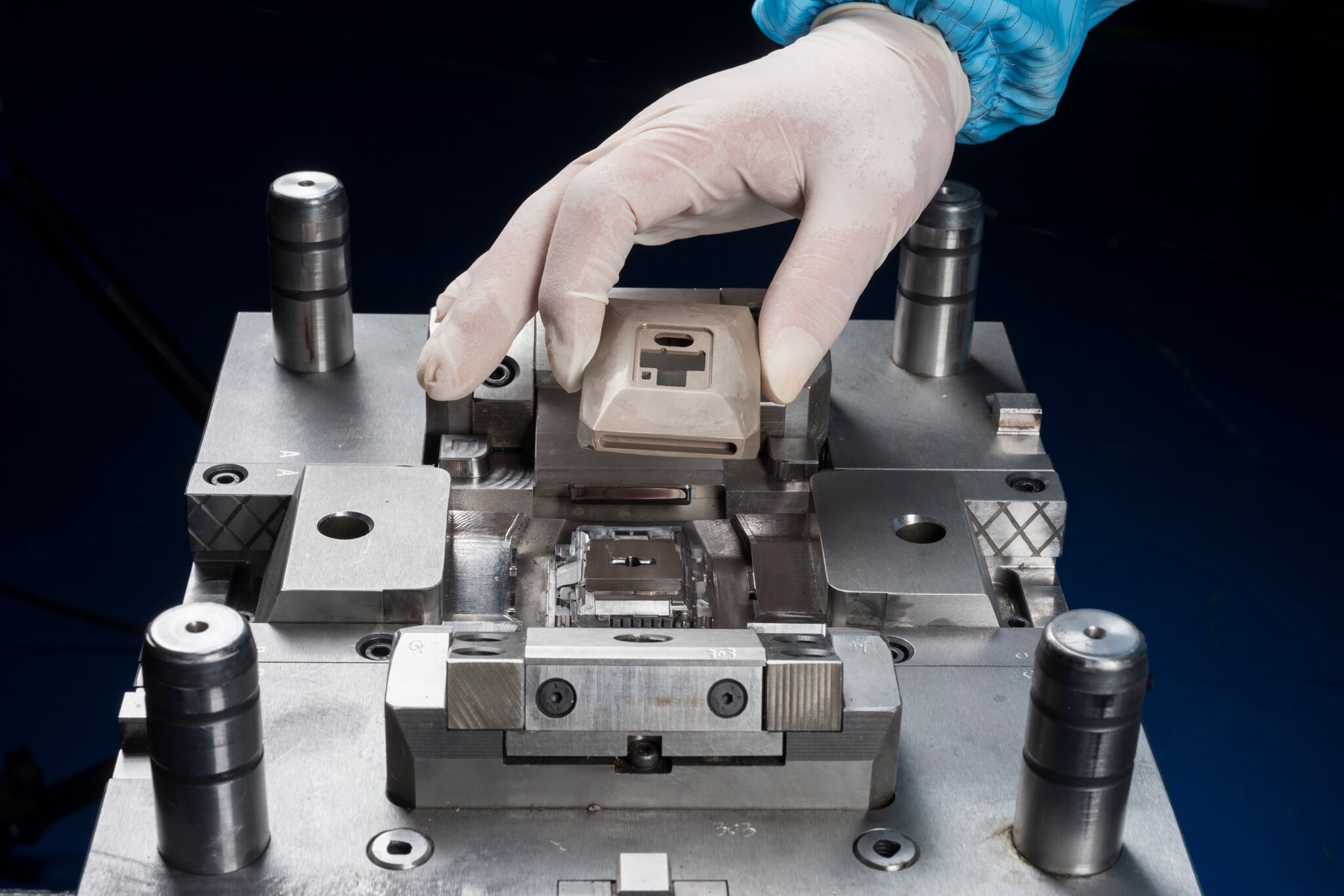
Who We Are
15+ years of industry experience · 100+ real-world projects · 1M+ units validated on a single production run · a service history spanning global clients. Precision ceramic injection molding is an extremely high-barrier, low-participant field. 15+ years means we've been in this industry for nearly as long as CIM has existed at industrial scale - this isn't a capability capital can replicate quickly. Every process judgment, every sintering-curve adjustment, comes from real project experience. The failures and successes across 100+ projects are the foundation of the accurate judgments we can make today at the design stage.
Cermatec in China
www.ceramic-molding.com is operated by Cermatec Material Technology Group China ("Cermatec"), the business entity behind this platform. Cermatec's development center and production facility are both located in China; our engineering team is deeply focused on CIM, working closely with the Asian CIM supply chain and raw-material producers in China and Japan. We serve international clients across the US, Japan, Europe, and China, spanning multiple industries - none of these partnerships require the client to establish a presence in China; we handle all supply-chain coordination.
Our current application scope and technical foundation center on zirconia and alumina. In parallel, our CIM injection technology is gradually extending toward newer ceramics like silicon nitride and aluminum nitride. What these new materials can concretely become is something we'd rather work through in depth with clients who have a genuine need - building on our existing technical base, and co-developing where necessary.
We do two things. First: deliver finished precision ceramic CIM parts - full-lifecycle management from DFM assessment through mold development, process validation, to volume production, with single-project production validated beyond a million units. Second: under the right partnership structure, help clients establish ceramic CIM supply capability wherever they need it - including facility setup, formulation and process-parameter tech-package transfer, and supply-chain construction; the location depends on the project's commercial logic and the client's needs, not necessarily China. We don't sell feedstock on its own. We sell finished parts, or a complete supply solution.
Verification System
Every critical process node has a traceable verification method - Moldflow simulation, injection short-shot trials, OGP optical dimensional measurement, and CT internal inspection. This four-way verification system ensures we deliver parts whose internal structure is verified, not just parts that match a drawing. racking of Real‑World Cases: Project 1: Three consecutive shipment batches. Among 8 inspected dimensions, the mean shift between batches was less than 0.004 mm. Project 2: FAI measurement report for 10 parts covering 74 dimensions, with a 100% pass rate.
What We're Not
- Not a full-process ceramics factory - we focus on precision CIM, and don't do dry pressing, tape casting, isostatic pressing, or other general ceramic processes
- Not a feedstock seller - we don't sell CIM feedstock on its own; we sell finished parts or a complete supply solution
- Not a fit for every project type - there are 8 kinds of projects we don't take, detailed in the Project Fit Guide below; the right project match is the foundation of a good long-term partnership
Project Fit Guide - 8 Things We Don't Do
/when-cim-fits/
Most suppliers only tell you what they can do. We'd rather do it differently - if your project genuinely isn't a fit for ceramic CIM, we'd rather you know before we start working together, not three months in. The eight situations below usually come down to two root causes: First, the inherent physical properties of ceramics—high hardness, low fracture toughness, sintering shrinkage, and the addition of inorganic oxide colorants—make them fundamentally different from metals and plastics. Second, the cost of the CIM process itself: complex ceramic parts are more cost-effective, but production cycles cannot be compressed with overtime, and post-sintering machining remains a significant cost driver. For each one, we describe the assumption an engineer usually walks in with, and why it doesn't hold up in ceramic CIM.
01 · Direct Material Substitution, No Structural Redesign - Root: Material Physics
If you're planning to take a metal or plastic CAD file, swap the material to ceramic, and change nothing else, that's very likely to surprise you at sintering. Ceramic's 1.2mm connecting-wall rule, R ≥ 0.5×t fillets, and 1:1.5 wall-thickness ratio are all governed by sintering stress and shrinkage behavior, which doesn't map to metal or plastic design experience. Worse, the problem usually only reveals itself after sintering - by then the structure is locked in, and rework costs far more than an hour of upfront evaluation.
02 · Heavy, Large, With No Brittleness-Aware Structure - Root: Material Physics
"Ceramic is hard" is true, but equating that with "impact-resistant" is the most common misjudgment. Hardness governs wear resistance, not impact tolerance: zirconia's fracture toughness KIC is only 8-10 MPa·m1/2, versus 50-100 for stainless steel. A large, heavily-loaded structure in bare ceramic, with no composite or protective-structure compensation, can easily crack from its own weight or a single drop during green-body demolding or handling.
03 · Purely Cosmetic-Driven, Ignoring Ceramic's Functional Uniqueness - Root: Process Economics
Treating ceramic as "a fancier plastic-plating effect" is an understandable but costly idea. CIM needs at least 7-10 days per batch, and once a furnace run is scheduled it can't be adjusted mid-cycle - this requires a stable, predictable volume plan behind it. Cosmetic-driven applications tend to iterate fast with short production windows, which doesn't naturally fit CIM's economics - often the cost and lead time only become clear after the design is already locked.
04 · Simple 2D Flat Geometry - Root: Process Economics
"We're using ceramic, so it should be CIM" is an assumption worth pausing on. CIM's real value is forming complex 3D geometry in one shot; if your part is a regular rotational body or simple flat structure, an alternative process like dry pressing will be more cost- and cycle-effective. Insisting on CIM anyway just adds an unnecessary premium.
05 · Highly Volatile Demand, Supply Chain Can't Absorb the CIM Cycle - Root: Process Economics
If you're used to the injection-molding or die-casting supply chain's rhythm - rush orders, sudden pauses, ad-hoc batch changes - ceramic CIM will feel uncomfortable. It's scheduled by furnace cycle; once loaded it can't be interrupted or reprioritized mid-run, and a single batch needs at least 7-10 days. When planning visibility drops below 6-8 weeks, or there's risk of sudden ramp-up or early shutdown, work-in-process loss and schedule slippage become a real, late-surfacing conflict.
06 · Requiring Color Match to Plastic Coating or Metal Anodizing - Root: Material Physics
Precise color-carding or Pantone matching is many people's default understanding of "color control," but that's not how ceramic works. Its color comes from mineral additives and a sintering chemical reaction, not surface coating - a batch-to-batch ΔE of 1-3 is an inherent material property that process control can't eliminate. Carrying that expectation into volume production makes acceptance disputes almost inevitable.
07 · Applying Metal/Plastic Test Parameters Without Structural Redesign - Root: Material Physics
The most common approach is lifting a metal or plastic spec-sheet template wholesale: uniform ±0.05mm across the whole drawing, or requiring ceramic to pass the same drum/drop test standard as a consumer-electronics metal or plastic part. The problem: ceramic fails by brittle fracture, metal and plastic fail by ductile deformation - under the same test parameters, the two aren't comparable at all. Judging ceramic against metal/plastic acceptance standards usually either misjudges the pass rate or produces unnecessary scrap.
08 · Designs Relying on Heavy Post-Machining Correction After CIM - Root: Process Economics
Treating CNC post-processing as a catch-all fix for design flaws works fine in metal machining, where cost is manageable. Ceramic CNC needs diamond tooling, with an effective cutting life of about 45 minutes, a material-removal rate 75-90% lower than metal, and total cost 20-100× higher - and if a rework attempt fails, the whole part is scrapped, with no metal-style repair-weld fallback. A structure that expects post-processing to bail it out simply doesn't pencil out on the ceramic process route.
Material Selection Framework
/material-selection/
There's no universal answer: zirconia, alumina, and silicon nitride are the three materials used most in precision CIM. They aren't competitors - they're three tools, each strong on a different performance axis. Using the wrong one isn't a process failure, it's a material-selection mistake. "Which is better" is the wrong question. The right one is: what's the single most critical performance constraint in your application?
Core Property Comparison
| Property | Alumina | Zirconia | Silicon Nitride |
|---|---|---|---|
| Hardness | HV1600-2000 · Mohs 9 | HV1100-1300 · Mohs 8-8.5 | HV1400-1600 |
| Fracture Toughness (KIC) | 3-4.5 MPa·m1/2 | 8-10 MPa·m1/2 (toughest) | 6-8 MPa·m1/2 (mid, well above alumina) |
| Flexural Strength | ~350MPa | 900-1200MPa | 700-1000MPa |
| Thermal Conductivity | ~30 W/m·K (heat-dissipating) | ~3 W/m·K (insulating) | 20-33 W/m·K (also heat-dissipating) |
| Density | ~3.9 g/cm3 | ~6.0 g/cm3 (heaviest) | ~3.2 g/cm3 (lightest) |
| Color | White | White / Black | Gray to black only |
| Biocompatibility | Good, clinical history | Excellent, ISO 10993 | Clinical use in spinal implants; some reported antibacterial surface properties |
| RF Signal Transparency | Dielectric, near-transparent | Dielectric, near-transparent | Low conductivity but rarely used for this; not a primary selection driver |
| Relative Cost | Lower | ~2-3× alumina | Typically highest - more complex sintering |
Two Counter-Intuitive Findings
First: alumina is harder than zirconia, but zirconia is tougher than alumina - hardness governs wear resistance, toughness governs impact and crack-growth resistance, and the two matter very differently depending on the application. Second: silicon nitride is the outlier - it combines hardness near alumina's with toughness clearly beyond alumina's, plus good thermal conductivity and excellent thermal-shock resistance. That "hardness + toughness + thermal-shock resistance" combination is something neither alumina nor zirconia achieves alone, which is why silicon nitride shows up in bearings, cutting tools, and high-temperature structural parts - at the cost of higher price and limited color options.
Decision Framework
Seven Typical Application Scenarios
- Scenario 1 - Industrial heat-dissipation structural part: choose alumina, its thermal conductivity is 10× zirconia's; zirconia is the wrong material choice here
- Scenario 2 - Precision medical device part: zirconia first; Y-TZP has over 30 years of clinical use, and its KIC 8-10 is the highest among these ceramics
- Scenario 3 - Precision cosmetic structural part: zirconia, available in white or black, achieving Ra 0.02-0.03μm after ball-mill polishing
- Scenario 4 - Wear-resistant industrial part: depends on wear type - pure abrasive wear favors alumina, sliding wear or combined impact loading favors zirconia
- Scenario 5 - Not sure: describe your application, and we'll give a material recommendation within 3 business days, free of charge
- Scenario 6 - Wireless-connected device housing: ceramic housings outperform metal housings by roughly 4-6dB in RF performance; metal shields signal, ceramic dielectrics barely attenuate it
- Scenario 7 - Extreme mechanical duty needing wear + impact + thermal-shock resistance together (e.g. bearing rolling elements, high-temperature wear structures): alumina and zirconia usually force a trade-off between "wear resistance" and "impact resistance"; silicon nitride is one of the few options that covers both while also offering excellent thermal-shock resistance - at the cost of higher material and processing cost, and a color limited to gray-to-black
Four Easily Overlooked Judgments
- Alumina isn't a "low-end substitute" - it's a different tool. Assuming zirconia is "better" because it's pricier is a logic error; choosing zirconia for a heat-dissipation application isn't just wasted cost, it's a functional mismatch
- Black and white zirconia must be evaluated separately - one mold can't satisfy both colors' dimensional requirements; each must be tooled to its own shrinkage rate
- Colorants change the material's physical properties - not just black vs. white; different color additives can shift post-sintering hardness and other physical properties, affecting subsequent polishing response. Factor this into process evaluation when choosing colored zirconia - don't assume every color shares identical process parameters
- Silicon nitride isn't a "universal upgrade" - its balanced hardness, toughness, thermal conductivity, and thermal-shock performance are genuinely excellent, but that doesn't mean it should replace alumina or zirconia everywhere: higher cost, limited color, and typically a narrower CIM process window than alumina/zirconia. The extra cost is only justified when the application genuinely needs "wear + impact + thermal shock" together
Cost Logic
/cost-logic/
Article 1 · Why Fixing a Ceramic Design Error Costs 100× More Than a Metal One
The message an engineer least wants to hear usually comes after the sintering furnace opens. The part is out, a dimension is off, or there's an extra feature that could have been avoided at the design stage. If this were an aluminum or stainless-steel part, the fix is straightforward: onto the CNC, rework, done in a few hours. If it's a sintered zirconia part, it's an entirely different order of problem.
Root of the problem: zirconia hardness is HV1100-1300, alumina HV1600-2000 - for comparison, stainless steel is roughly HV200, titanium alloy ~HV300, carbide tooling ~HV1500. Machining zirconia needs a tool harder than the material itself - in practice, only diamond will do it. Diamond grinding wheels cost from hundreds to thousands of dollars, with an effective cutting life measured in minutes - each tool change means downtime, re-indexing, reparameterization, and hidden time cost more than 10× that of metal machining. Ceramic CNC's material-removal rate is 75-90% lower than metal's; the same rework operation takes 1 hour on an aluminum part and 5-10 hours on sintered zirconia.
The bigger problem: before a ceramic CIM part ever reaches CNC, it has already been through injection molding -> debinding (~24-36 hours) -> sintering (~36 hours at 1500°C) -> ball-mill polishing (~48-72 hours) - typically more than a week of elapsed time from injection to furnace exit, with all energy and equipment cost already spent. Stacking high-cost ceramic post-machining on top of that is a double penalty: the upstream process-chain cost can't be recovered, and ceramic CNC itself costs 20-100× more than metal. If the rework fails, the whole part is scrapped and every cost already incurred goes to zero.
| Metric | Metal | Ceramic |
|---|---|---|
| CNC tooling | Carbide, hours of life | Diamond, ~45 min effective life |
| Material removal rate | Baseline | 75-90% lower |
| Rework time | ~1 hour | 5-10 hours |
| Overall CNC cost | Baseline | 20-100× higher |
| If rework fails | Re-machine | Part scrapped, restart the whole process chain |
| Upfront time already invested | Minutes to hours | Over a week |
Article 2 · Why Ceramic CIM Defects Always Surface at the Most Expensive Moment
There's a cruel rule in ceramic CIM: the moment a defect is created and the moment it's discovered almost never coincide. This isn't a quality-control problem - it's a structural reality of the process chain. From injection to finished part: injection (minutes) -> debinding (24-36 hours) -> sintering (36 hours) -> ball-mill polishing (48-72 hours). Cost accumulates left to right along that timeline, but defects are discovered right to left - the later it's found, the more expensive it is.
Four defect types and when they surface: Type 1 - created at injection, only visible at sintering/polishing (injection yield ~95%, but the 5% defective parts look normal - green-body binder "fills out" the body and masks the problem until sintering or polishing exposes it). Type 2 - uneven green-body density, surfaces as sink marks or warpage at sintering. Type 3 - green-body damage from demolding or handling, surfaces as chipping at polishing. Type 4 - furnace-atmosphere or contamination issues, surface as color stains after sintering/polishing.
| Stage | Cumulative Yield | Cost Already Incurred When Found |
|---|---|---|
| Mixing | ~99% | - |
| Injection | ~95% | Injection cost only, seconds |
| Debinding | - | Injection + debinding, ~1-2 days |
| Sintering | 80-95% | Injection + debinding + sintering, ~3–5 days |
| Ball-mill polishing | ≤85% | Full process chain, over a week |
Cumulative yield across the full chain lands around 65-75%.