Quality Diagnostics · D01
Invisible before sintering - by the time you see it, the cost is already at its highest.
Sink Mark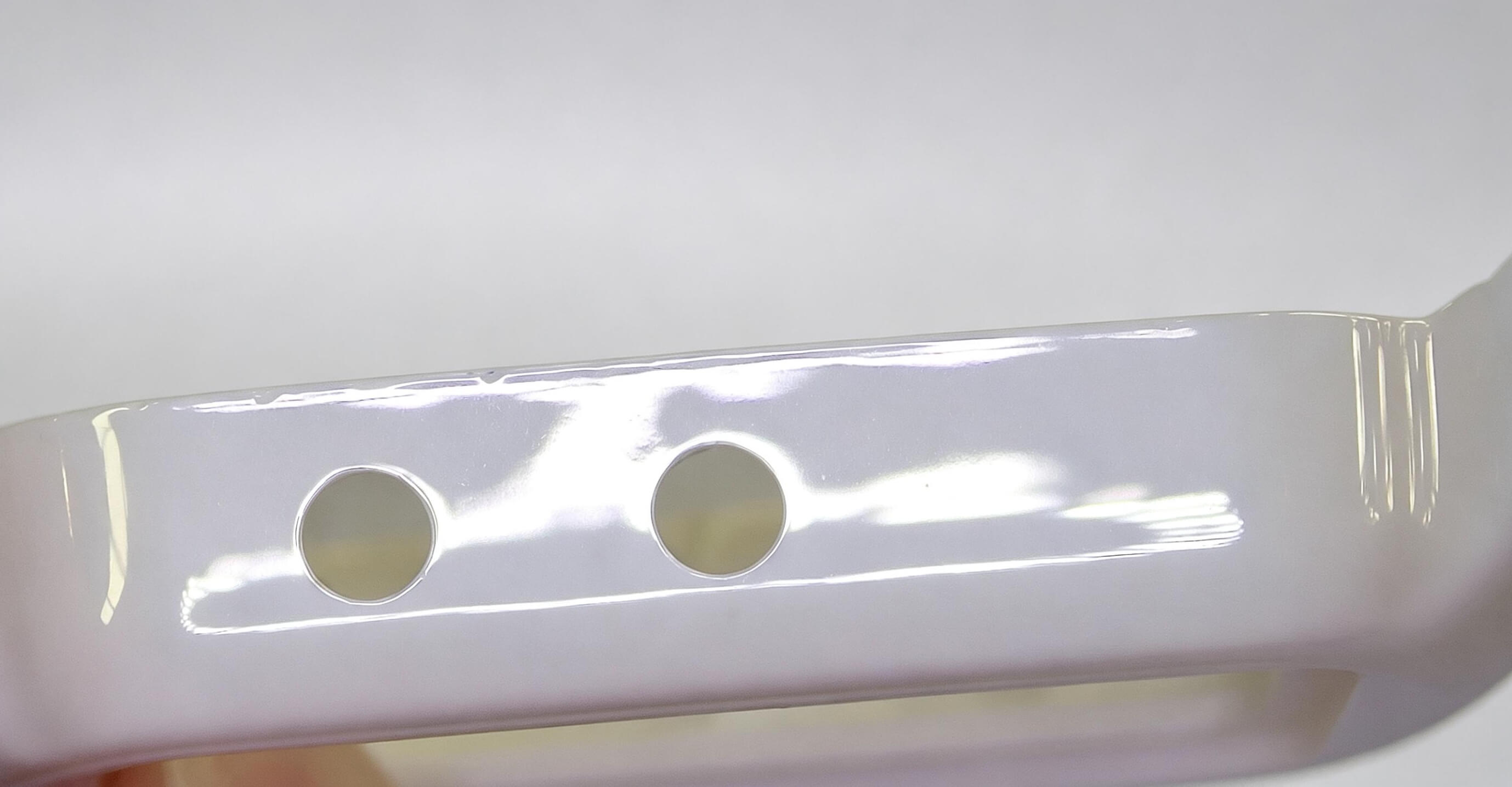
Symptom: a localized depression on the cosmetic face after sintering, most common behind ribs, at boss roots, and at thick/thin transitions. Not visible after injection, not visible after debinding - it only shows up after sintering.
Three-step mechanism:Injection - the thick region takes a larger feedstock charge, binder content is high, the surface looks flat, no sign of shrinkage.Debinding - binder vaporizes; the thick region's internal porosity runs far higher than the thin region's, but the outer shape still holds.Sintering - pores collapse, the thick region shrinks far more than the thin region, the surface caves inward - irreversible and now visible.
- Control wall-thickness ratio ≤1:1.5
- Keep rib wall thickness ≤50% of the nominal wall
- Add a fillet or chamfer at thick/thin transitions
- Use Moldflow at the DFM stage to predict sink-risk zones in advance