Whitepapers · 03
Under what conditions can ±0.05mm be stably achieved - and does real production data actually hold up?
WP-03 · The Conditions Behind ±0.05mmI · Consecutive Batch Records from One Project
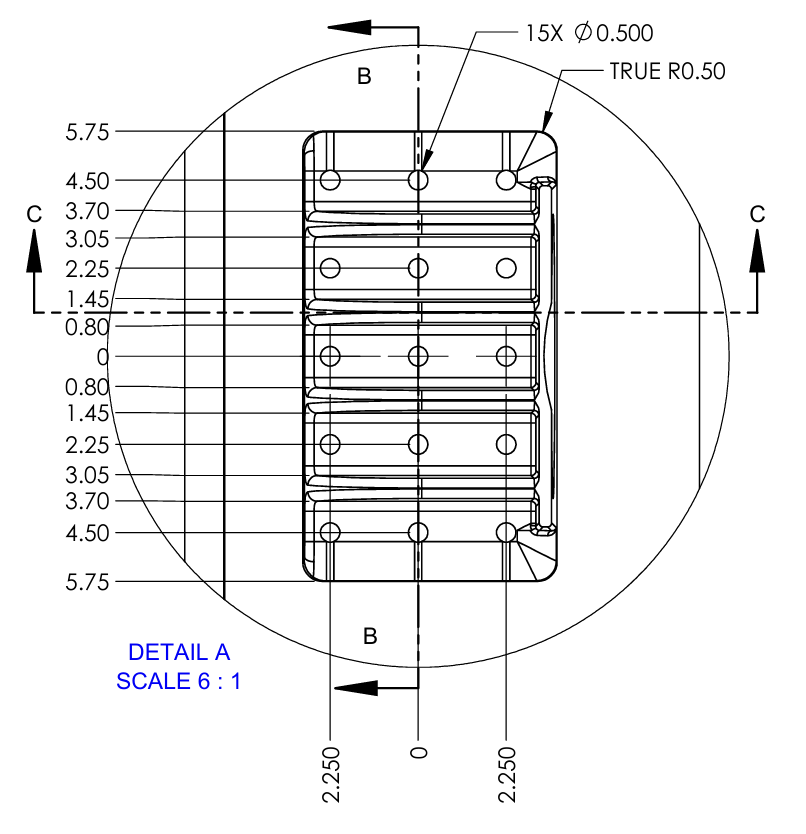
The following data comes from consecutive batch inspections for one production project and is not cross-referenced with any other customer project: 18 parts per day across two cavities, eight dimensions per part, over three consecutive working days - 432 measurement points in total, all accepted. This is a same-project record across dates and cavities, not a single spot check.
II · Batch Consistency - More Convincing Than a Single Pass Rate
Project 1's three consecutive daily reports let us directly calculate drift between batches on the same dimension set, rather than a single day's snapshot. The finding: this isn't a "just barely passing" lucky outcome - the same production line delivered nearly overlapping measurement distributions across three consecutive working days.
III · An Honest Boundary - Project Evidence Is Not a Universal Promise
This record demonstrates stability only for the evaluated material, geometry, tooling, and process window. It does not make ±0.05mm a default promise for every part. A new project still requires DFM review of feature span, wall uniformity, measurement datums, and any secondary finishing; data from other customer projects is not presented alongside this record.
IV · What This Consecutive Data Set Shows
- Three consecutive production days across two cavities reveal process repeatability more clearly than a single spot check
- Tolerance-band utilization carries more information than a binary pass/fail result; acceptance should consider range and process margin together
- Batch-to-batch drift data (same dimension, different dates) is stronger evidence than any single pass rate - it proves process stability, not a lucky day
V · Design Rules
- Don't look only at pass/fail - ask your supplier for range data and tolerance-band utilization to see real process margin
- Dimensions running above 30-40% tolerance-band utilization are worth reconsidering for relaxation at the design stage, even if currently passing, to leave margin for batch stability
- Batch-consistency data (the same dimension across multiple production days/lots) is more informative than any single pass-rate number for real process capability
PROJECT CTA
Does this apply to your project? If your design is running into a similar issue, send us your design files or describe your application — we'll give you a clear judgment within 3 business days.