DFM Design Guide · 07
Ceramic can't be tapped after sintering, and molded internal threads have low yield - in most cases, a metal insert is the more sensible answer.
Threads & Fastening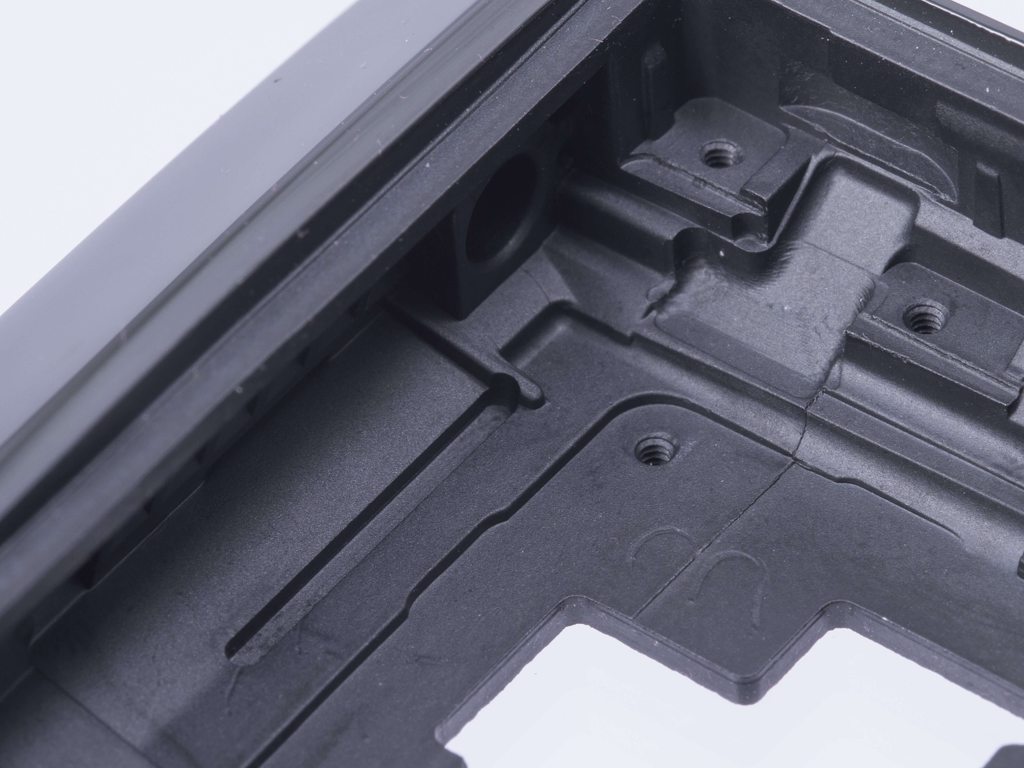
Failure Scenario
Engineer assumed "just tap the ceramic part like any other." Supplier's answer: possible, but it needs a rotating core for demolding, yield is only ~60%, and it can't be tapped after sintering. The entire fastening plan had to be re-reviewed.| Approach | Method | Best For |
|---|---|---|
| Metal thread insert | Recommended | Reserve a light hole (0.1-0.2mm larger than thread diameter), bond in a metal insert. Most applications needing removable connections. |
| Interference-fit light hole | — | Precision light hole + metal dowel pin, held by fit tolerance. Applications not needing frequent disassembly, with positioning-accuracy needs. |
| Molded ceramic internal thread | — | Thread formed directly in CIM. Only when a metal insert isn't feasible - needs case-by-case evaluation. |